Claude 3.7 Sonnet’s historical significance was a practical choice: use a standard response or allocate more tokens to extended thinking within the same model. This retrospective examines what hybrid reasoning meant at the 2025 launch, how a thinking budget changed the trade-off, and why benchmark conditions matter when reading the original claims.
Historical context: Claude 3.7 Sonnet was retired from the Claude API on February 19, 2026. This article is now a historical and technical retrospective: it explains what Anthropic actually introduced in February 2025, corrects the original description, and shows which design ideas continued into later Claude releases.
When Anthropic announced Claude 3.7 Sonnet on February 24, 2025, the headline feature was easy to summarize and easy to misunderstand. Anthropic called it the first “hybrid reasoning model” on the market. That phrase did not mean that the model combined symbolic reasoning with machine learning. It meant that one Claude model could answer in a fast standard mode or spend additional tokens on an extended-thinking pass before returning its answer.
Key Takeaways
- Hybrid reasoning described two selectable operating modes in the same model, not a symbolic AI subsystem.
- The API exposed a thinking budget, so developers could trade latency and cost for deeper analysis.
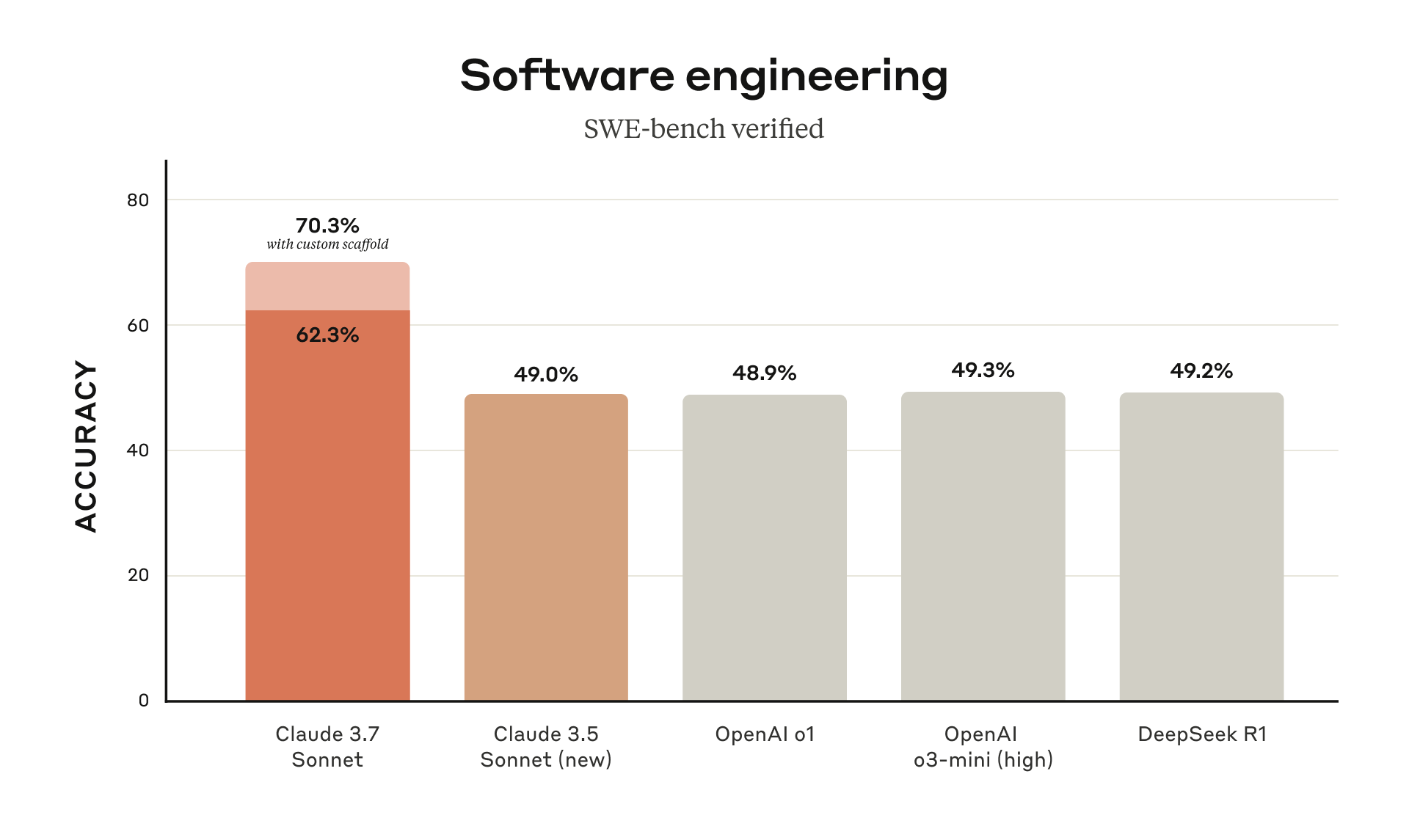
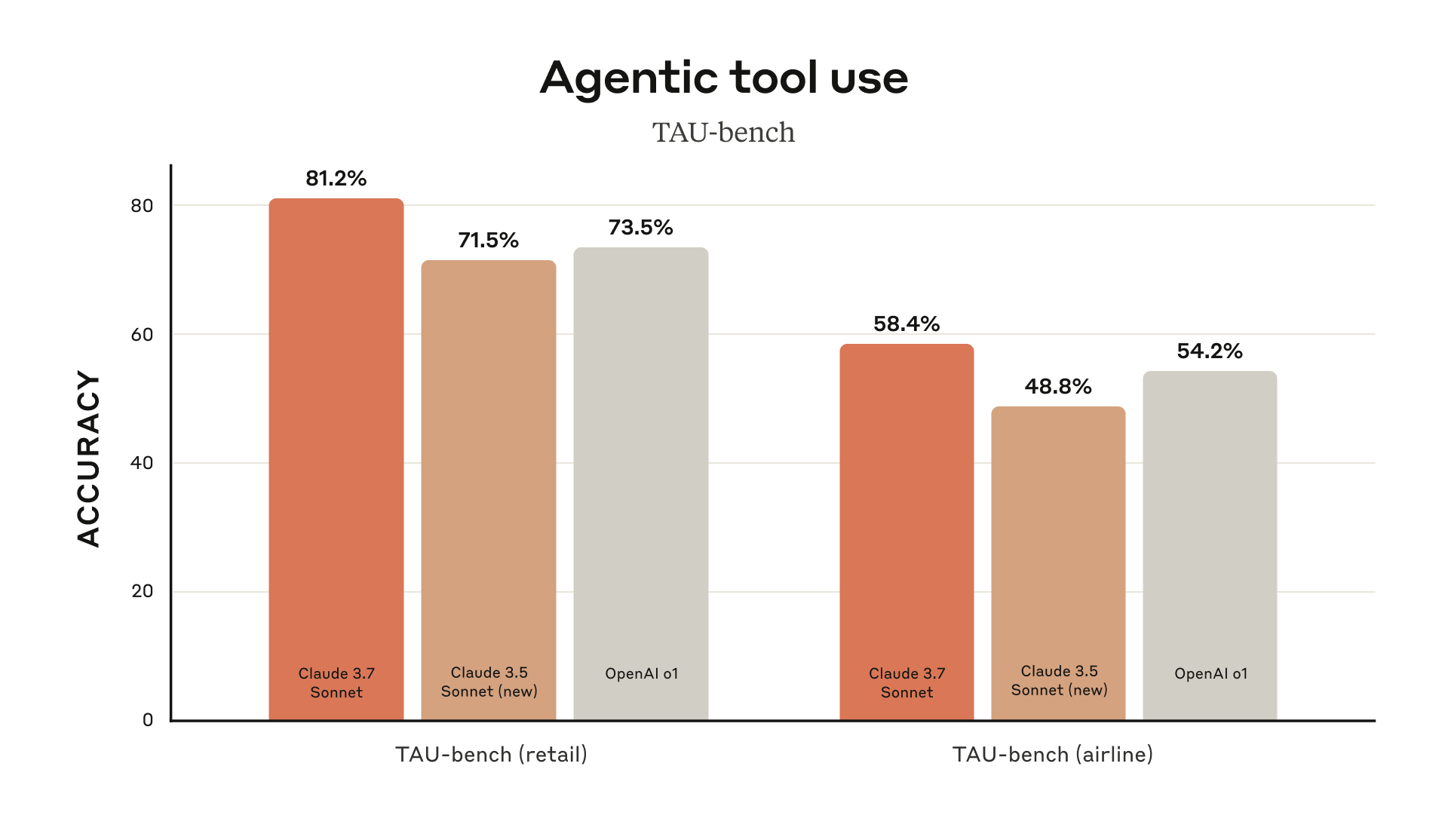
- Anthropic reported strong coding, SWE-bench Verified, and TAU-bench results, but those numbers depended on the evaluation scaffold and should not be read as universal capability scores.
- Claude Code made the release relevant to agentic software work, while the model still required human review, permissions, and tests.
- Claude 3.7 is retired today. Its lasting importance is the product pattern of making deeper reasoning an explicit, controllable capability.
What “hybrid reasoning” actually meant
Anthropic’s own explanation is more precise than the original version of this article. Claude 3.7 Sonnet was both an ordinary language model and a reasoning model. A user could select a normal response when speed mattered, or enable extended thinking when a task benefited from a longer planning and verification pass. The model did not switch to a separate symbolic engine, and Anthropic did not claim that user conversations continuously retrained the deployed model.
That distinction matters in practice. A resume rewrite, short explanation, or routine classification usually does not need a large reasoning budget. A difficult code change, multi-step plan, or tool-driven task may benefit from spending more output tokens on analysis before the final answer. The useful abstraction is therefore a latency–quality control, not a new category of logic.
Standard mode versus extended thinking
| Decision | Standard mode | Extended thinking |
|---|---|---|
| Best fit | Short answers, editing, routine extraction, and latency-sensitive requests. | Planning, difficult code, math, tool selection, and tasks with several constraints. |
| What changes | Claude answers directly with the ordinary response path. | Claude produces thinking blocks before the final answer. Do not assume the response/display controls of later models describe this historical interface. |
| Cost and latency | Lower typical latency and fewer billed output tokens. | More thinking tokens can improve difficult-task results, but increase latency and billed output usage. |
| Developer control | Prompt and max output length. | Prompt plus a thinking budget, subject to the request’s max-token limit. |
At launch, both modes used the same published price: $3 per million input tokens and $15 per million output tokens, with thinking tokens included in output usage. The practical cost question was not “Is reasoning free?” but “Does the additional reasoning reduce rework enough to justify the tokens and delay?”
Thinking budget: the API control that made the idea concrete
Claude 3.7’s API exposed a numeric thinking budget, making the quality, speed, and cost trade-off explicit. The historical request below sets a 10,000-token thinking budget within a 20,000-token total output limit. Thinking is not an extra allowance on top of that total, and the configured budget is not a promise about actual usage. Leave room for the final answer and inspect the reported usage and stop reason. Do not copy launch-era maximum-output claims into a current integration without checking its model-specific limits.
import anthropic

client = anthropic.Anthropic()

# Historical Claude 3.7 request shape (the model is now retired)
message = client.messages.create(
    model="claude-3-7-sonnet-20250219",
    max_tokens=20000,
    thinking={"type": "enabled", "budget_tokens": 10000},
    messages=[{
        "role": "user",
        "content": "Review this deployment plan, identify failure modes, "
                   "and return a short, testable checklist."
    }]
)

for block in message.content:
    if block.type == "thinking":
        print("thinking text:", block.thinking)
    elif block.type == "text":
        print("answer:", block.text)
This example is included to document the 2025 interface, not to suggest that the retired model can still be called. A modern implementation should select an active model and follow its current thinking configuration. In 2026, a reproducible test should record the model ID, max output, thinking setting, input size, latency, total billed tokens, and whether a human reviewer accepted the result.
What the benchmarks showed—and what they did not
Anthropic reported state-of-the-art results for Claude 3.7 Sonnet on SWE-bench Verified and TAU-bench. These are useful signals because they resemble real engineering and tool-use work more closely than a single multiple-choice score. They are still evaluation results, not guarantees about every repository or agent workflow.
| Benchmark | What it tests | How to read the 2025 result |
|---|---|---|
| SWE-bench Verified | Resolving real software issues with repository tools. | The appendix compares 63.7% vanilla and 70.3% high-compute results on the 489-task solvable subset. It separately explains counting 11 incompatible tasks as failures for the full-set vanilla leaderboard result. Keep the denominator and scaffold attached; do not mix those reporting bases. |
| TAU-bench | Multi-turn interaction with users and tools. | The result used a planning-tool prompt addendum and allowed up to 100 completion steps, so it is not a pure model-only score. |
| General and multimodal evaluations | Instruction following, reasoning, vision, and related abilities. | Extended thinking improved some difficult tasks, but gains varied by task and budget. |
My interpretation is that the scaffold is part of the product story. A model that can choose files, run tests, or use a planning tool may solve more tasks than the same model in a bare chat. When comparing releases, record the scaffold and the budget alongside the headline score.
Claude Code: why this release mattered to developers
Claude 3.7 launched alongside Claude Code, initially as a limited research preview. Anthropic described a command-line collaborator that could search and read a codebase, edit files, run tests, commit and push changes, and use command-line tools while keeping the developer in the loop. That is a different value proposition from a chat window: the model’s usefulness depends on tool permissions, repository context, test coverage, and the quality of its recovery when a command fails.
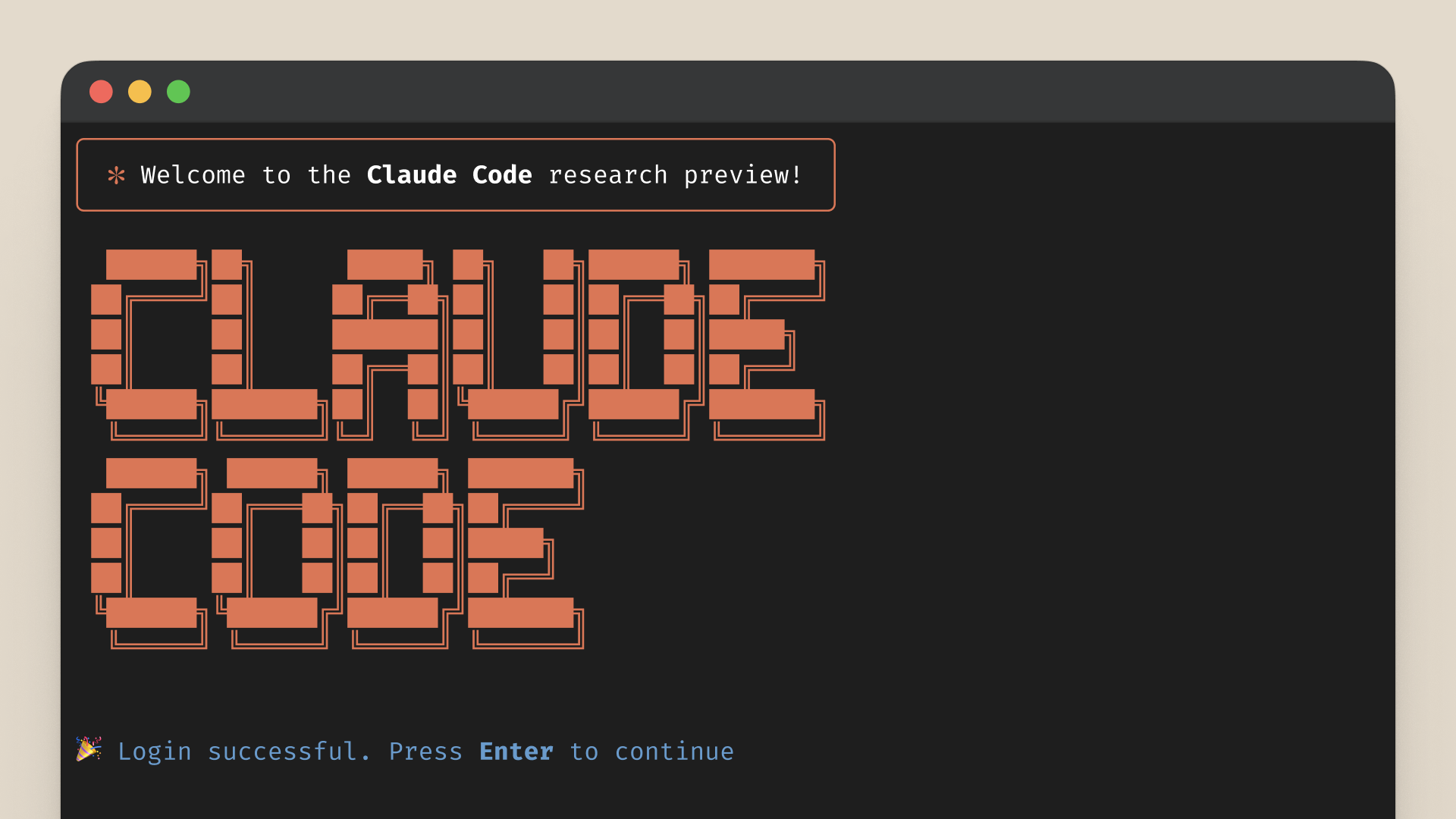
Claude Code also explains why “reasoning” should be evaluated as a workflow. A longer internal analysis is only helpful if it leads to a correct patch, a passing test, or a clear explanation of uncertainty. For production use, the developer still owns credentials, sandbox boundaries, review approval, and the decision to merge.
A worked decision: pay for an accepted result, not a longer answer
Suppose a team is choosing a configuration for a repeated, low-risk editing task. It tests the same 100 inputs against a rubric written before the test: preserve every supplied fact, satisfy the requested format, and introduce no unsupported claims. A reviewer checks the outputs without seeing the configuration name. The figures below are invented to illustrate the calculation; they are not Claude 3.7 measurements.
ILLUSTRATIVE COST LEDGER / NOT A MODEL BENCHMARK
More accepted answers can still cost more per answer.
100 requests · 70 accepted
100,000 input + 50,000 output tokens
100 requests · 90 accepted
100,000 input + 250,000 output tokens
Arithmetic uses the historical launch rates of $3/million input and $15/million output tokens. Output totals include thinking. No cache discounts, tools, retries, or reviewer costs are included.
Configuration B costs three times as much per accepted result in this invented batch. That does not automatically make it the wrong choice: avoiding an expensive downstream failure may be worth the extra cost. Conversely, routine transformations may not justify the delay. Include reviewer time, all failed attempts, tool charges, and any retry cost before choosing a production setting.
Keep the test narrow enough to inspect. For a code task, acceptance should include the relevant tests and a review of unintended edits, not just a convincing explanation. Repeat uncertain cases, retain failures, and record the exact model and configuration. A 100-task pilot can expose practical problems; it is not a universal ranking or a guarantee about future traffic.
What Claude 3.7 did not do
- It did not add symbolic reasoning. Hybrid referred to selectable standard and extended-thinking behavior inside one model.
- It did not continuously learn from each conversation. A deployed model’s response to a prompt is not evidence that its weights were updated from that interaction. Anthropic’s system card and privacy documentation should be used when making data-retention or training claims.
- It did not guarantee correctness. Thinking can produce a more considered answer and still miss a requirement, follow a misleading instruction, or produce an unsafe change.
- It did not make benchmarks interchangeable. Prompt scaffolds, tool access, retry policies, and test selection can materially change an agent score.
What changed after Claude 3.7
Claude 3.7 Sonnet was retired from Anthropic’s API on February 19, 2026, and Anthropic lists Claude Sonnet 4.6 as the recommended replacement for the API model ID. That lifecycle is normal for a fast-moving model platform, but it changes how this article should be read: Claude 3.7 is now a historical reference, not a deployment recommendation.
The design idea did continue. Anthropic’s Claude 4 announcement again described hybrid models with near-instant and extended-thinking modes, then added features such as extended thinking with tool use and parallel tool execution. It is safer to describe this as a product pattern Anthropic carried forward than to claim that one release alone caused every later change.
Tech Trend Insight Editorial Verdict
Claude 3.7 Sonnet was significant because it turned reasoning depth into an explicit operating choice. The release was less about symbolic logic than about making a model spend more computation when a task justified it. Its benchmark claims are meaningful only with their scaffold and budget attached, and its agentic coding story still depends on developer-owned tests and permissions. In 2026, the fairest conclusion is that Claude 3.7 was an important step toward controllable reasoning, even though the model is no longer available through Anthropic’s API.
FAQ
Was Claude 3.7 Sonnet a symbolic reasoning model?
No. “Hybrid reasoning” meant that the same model supported standard responses and an extended-thinking mode. Anthropic did not describe a symbolic theorem prover or a separate symbolic subsystem.
Can I still call Claude 3.7 Sonnet through the API?
No. Anthropic’s current model-deprecation documentation lists claude-3-7-sonnet-20250219 as retired on February 19, 2026, with Claude Sonnet 4.6 as the recommended replacement. Update the model ID and re-check the current thinking API before migrating. Partner-operated platforms can have their own lifecycle schedules; verify the platform you actually use.
How should I evaluate a reasoning model for production?
Use a small task set that represents your own workload. Record success criteria, tool permissions, retries, latency, token usage, and human-accepted outcomes. Run the same tasks in standard and thinking-enabled configurations, then compare the cost of a successful result rather than a benchmark score alone.
Does doubling the thinking budget double accuracy?
No. A budget is a configuration choice, not a measured quality score. Try several settings on the same reviewed cases and record actual billed usage, latency, and failures. Keep the smallest setting that meets your acceptance criteria; some tasks may not benefit from additional reasoning at all.
Is a visible thinking block evidence that the answer is correct?
No. Treat it as generated model content, not an independent audit log or a proof of the complete internal computation. Verify the final claims against sources, calculations, or tests. A persuasive explanation can coexist with a wrong result.
Can I migrate by changing only the model name?
Do not assume so. Check the destination model’s supported thinking controls, output limits, tool behavior, and pricing. Re-run representative cases and inspect the response format. The historical request above documents the old interface; it is not a drop-in template for every later model.
Revision record: September 13 and 19, 2026 — reframed the article as a historical retrospective, clarified thinking controls and benchmark denominators, and added a hypothetical cost example and FAQ. September 26, 2026 — consolidated revision notes; technical sections and original figures retained.