AI News
Claude Meetings Beta: From a Conversation to Editable Work
Claude Meetings brings an AI participant into a call and lets the team turn discussion into editable work while people are still talking. The useful question is whether the resulting plan captures the decisions accurately—and whether everyone understands what is being retained.
Scope: Beta rollout for Team and Enterprise; initially Google Meet
Read the official announcement ↗
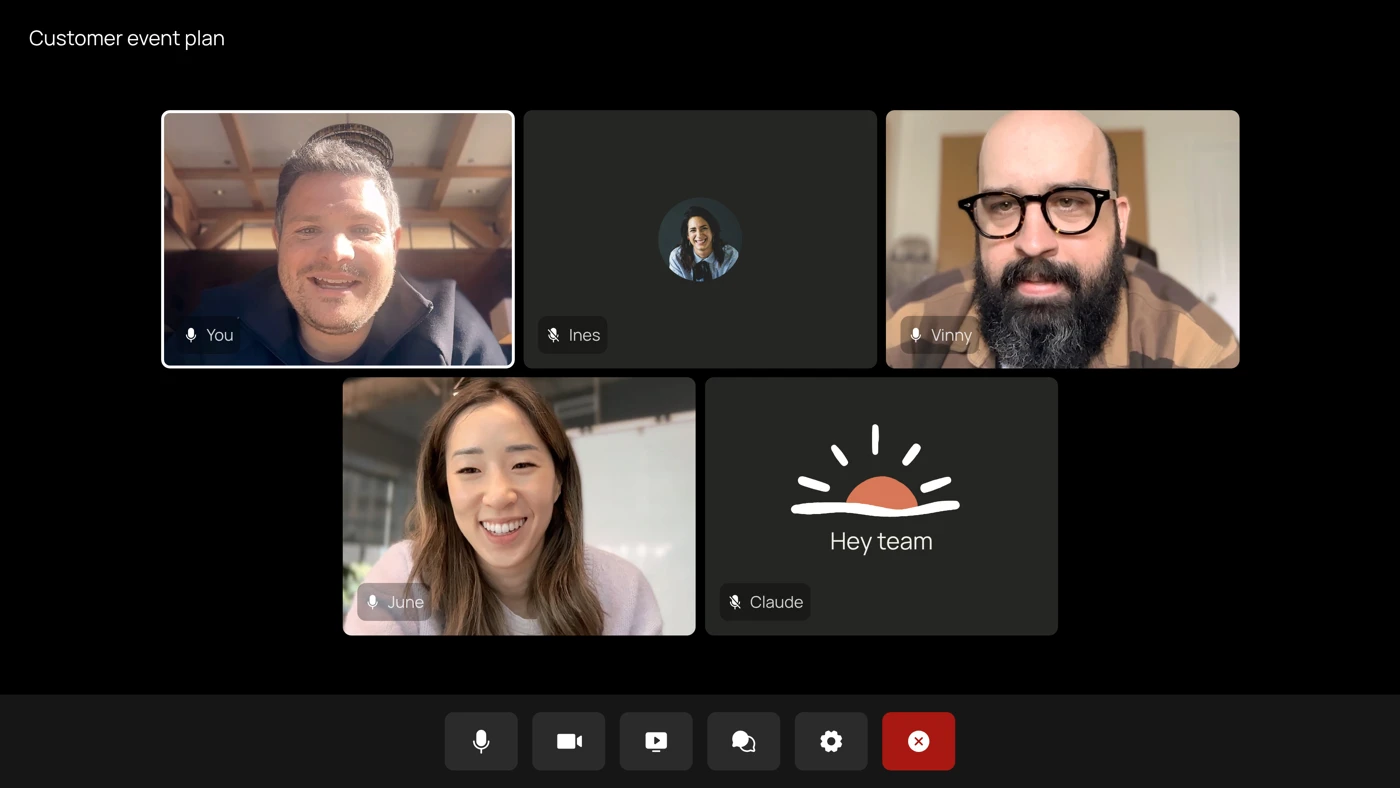
A visible participant changes the workflow
In the official example, Claude appears beside the people in a customer-event planning call. This makes the presence of the assistant part of the meeting rather than an invisible background assumption. The participants can ask it to begin a plan and continue refining the artifact together.
That is different from receiving a summary after everyone leaves. A shared plan can expose misunderstandings while the people who made the decision are still present. If an owner or deadline is wrong, the team can correct it immediately instead of discovering the problem in a later follow-up.
Read the plan as work in progress
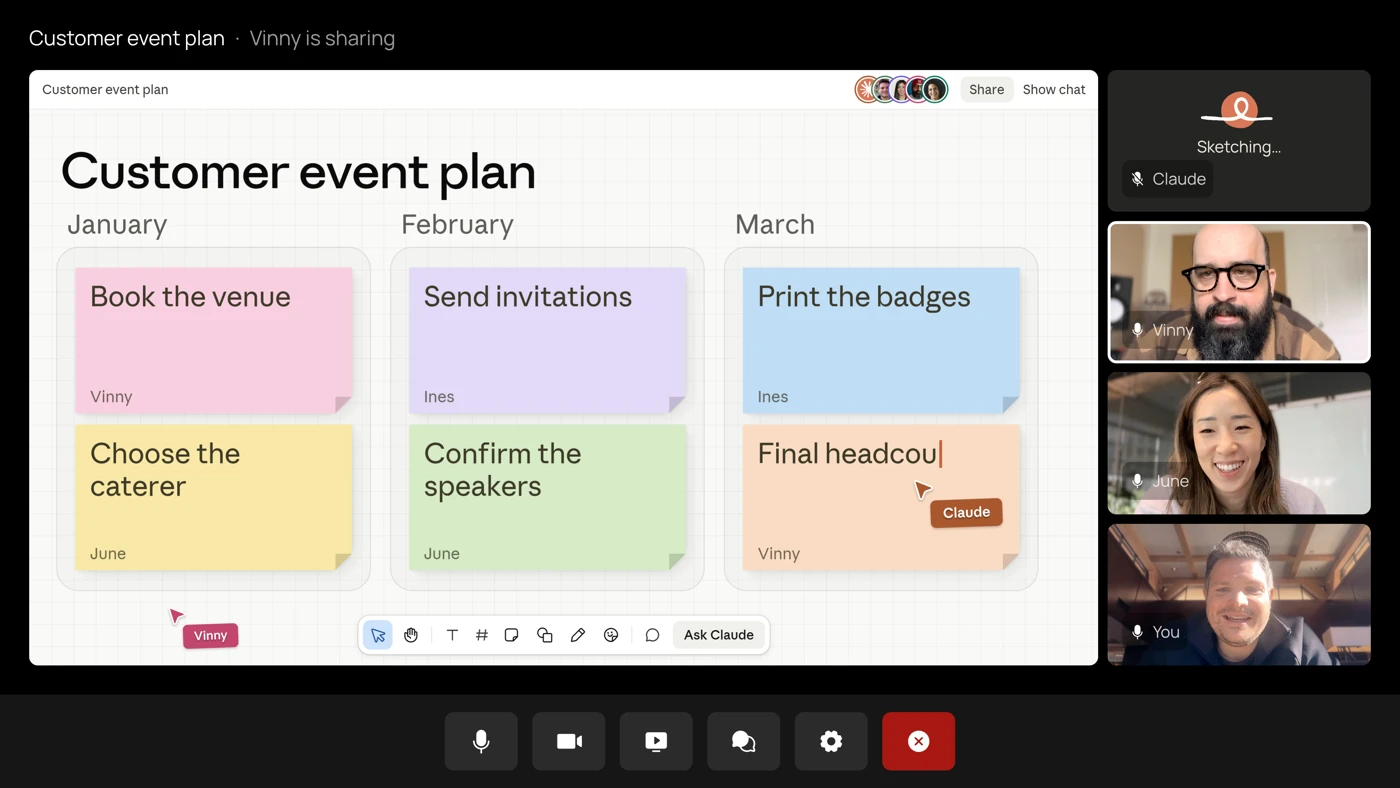
Imagine a fictional launch review where the date moves from Wednesday to Friday halfway through the call. A useful artifact would show Friday in the final plan, preserve the reason for the change and keep the owner attached to the task. A transcript containing both dates is not enough: the summary must distinguish the earlier proposal from the later decision.
This is an evaluation pattern, not a meeting we ran. Choose a few specific items before a trial: an amended deadline, one rejected idea and one unresolved question. After the call, compare each item with the artifact. That creates a more meaningful check than asking whether the prose sounds like good meeting notes.
| During the call | What to verify afterward |
|---|---|
| A proposal changes | The final plan uses the agreed version, with the earlier idea clearly superseded. |
| Someone volunteers an action | The task has the right owner and a real due date, or explicitly says the date is unresolved. |
| A question remains open | The summary does not turn uncertainty into an invented decision. |
| An external fact is requested | The source and permission for the lookup are identifiable. |
The meeting page is the reviewable record
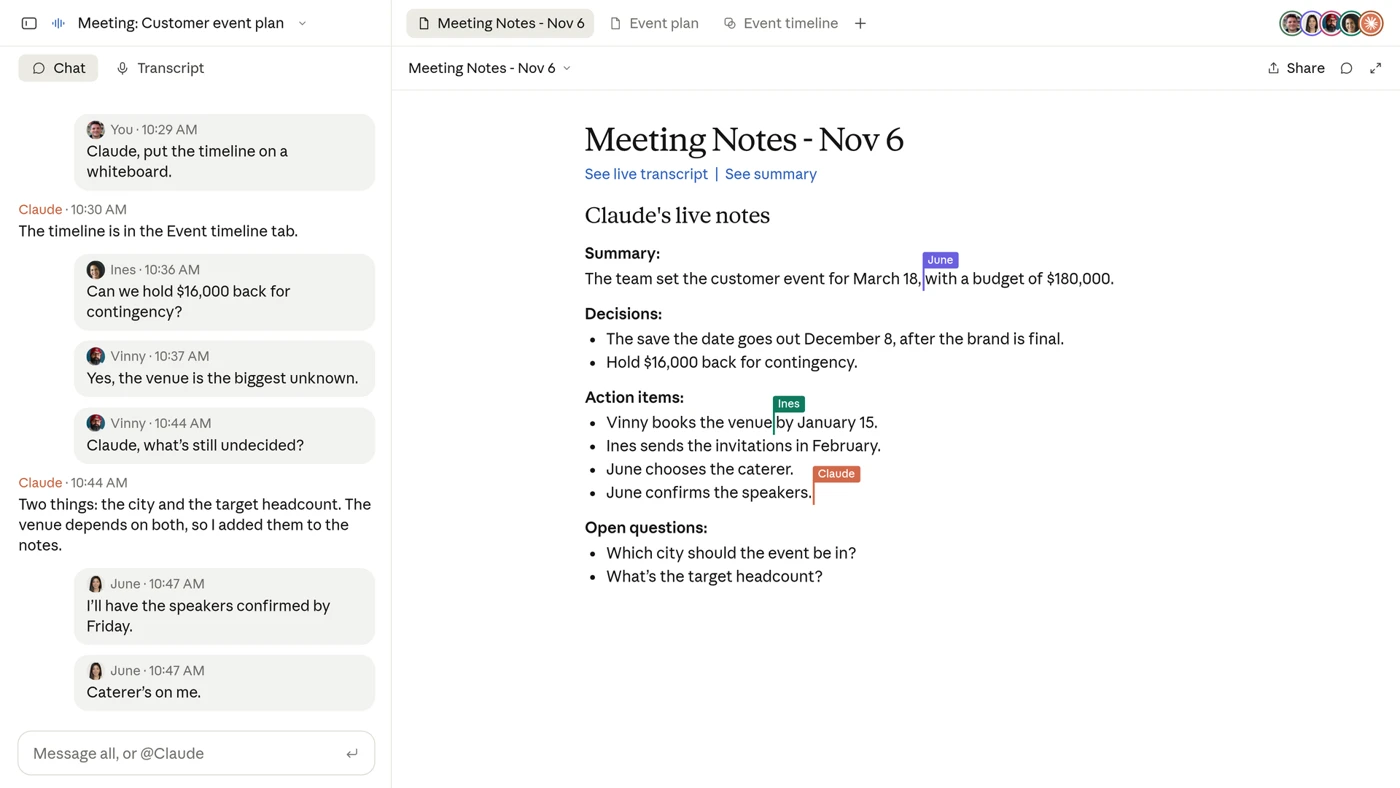
A separate meeting page can be useful because the recap, transcript and artifacts are different kinds of evidence. The transcript helps resolve what was said; the plan expresses what should happen; the action list assigns responsibility. Reviewing one does not automatically validate the others.
Before the meeting ends, ask participants to check the few decisions that matter most. If a number came from another system, retain the reference rather than treating a confident sentence as proof. The Whiteboards, Sheets and Data explainer describes how these artifacts differ once the work leaves the call.
What is retained, and who can see it?
Anthropic’s announcement says Claude stores a transcript, summary and screen descriptions, rather than audio. It appears as a participant and posts a notice. The Meetings help guide covers setup, participation and meeting access. Check the organization’s rules and obtain participants’ agreement before adding an assistant or enabling auto-join.
External guests require particular attention. The launch description says Claude stays out of meetings with outside participants by default unless an administrator allows that use. A question answered in the call can also expose information to the people attending. An existing connector permission is not a reason to assume every result belongs in a shared meeting chat.
Availability and costs are part of the decision
This is a Team and Enterprise beta, initially for Google Meet. Some organization configurations are excluded, and Enterprise administrators must enable access. An individual paid Claude subscription should not be treated as equivalent to a Team workspace with Meetings enabled.
The announcement distinguishes beta meeting notes and transcripts from work that uses connected tools and counts toward plan usage. It also describes a time-limited offer for generated artifacts. Confirm the current terms in the official guide before budgeting for recurring calls; a launch offer is not a permanent promise of free usage.
Start with a fictional call
A sensible first evaluation uses invented names, a small agenda and no private systems. Ask the assistant to record a decision, amend it and leave one question unresolved. Inspect the saved page with the intended reviewer’s access. Only after those checks should a team decide whether the feature improves its actual meeting process.
Reviewed November 15, 2026. Discovery lead: JoCoding’s November 15 IT NEWS briefing. Product claims were checked against primary sources. All meeting images are supplied by Anthropic. We did not invite an assistant into a real call, inspect private transcripts or reproduce the demo.