Code Lab
OpenMAIC Explained: Multi-Agent Classrooms and Course Generation Controls
CODE LAB · PROJECT SPOTLIGHT
OpenMAIC TypeScript · MIT
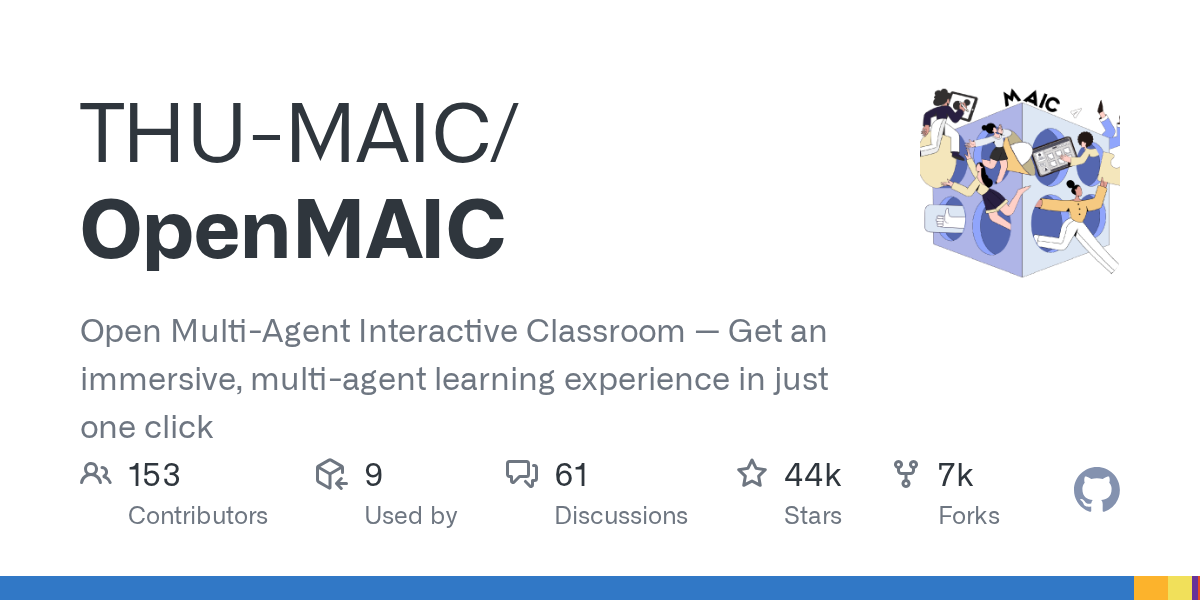
Open Multi-Agent Interactive Classroom — Get an immersive, multi-agent learning experience in just one click
Preview: GitHub · THU-MAIC/OpenMAIC
A multi-agent classroom can generate more than a chat reply: slides, activities, images and a learning sequence. OpenMAIC makes that workflow inspectable, including controls around who can trigger new generation.
THU-MAIC’s OpenMAIC builds interactive learning experiences with AI agents and course materials. Its README documents durable sessions, course editing and provider configuration. The reviewed news list identifies v1.4.2 as a stable release and v1.5.0-rc.2 as a release candidate whose redesigned workbench is off by default. Those states should not be merged into a single claim that every new UI is already enabled.
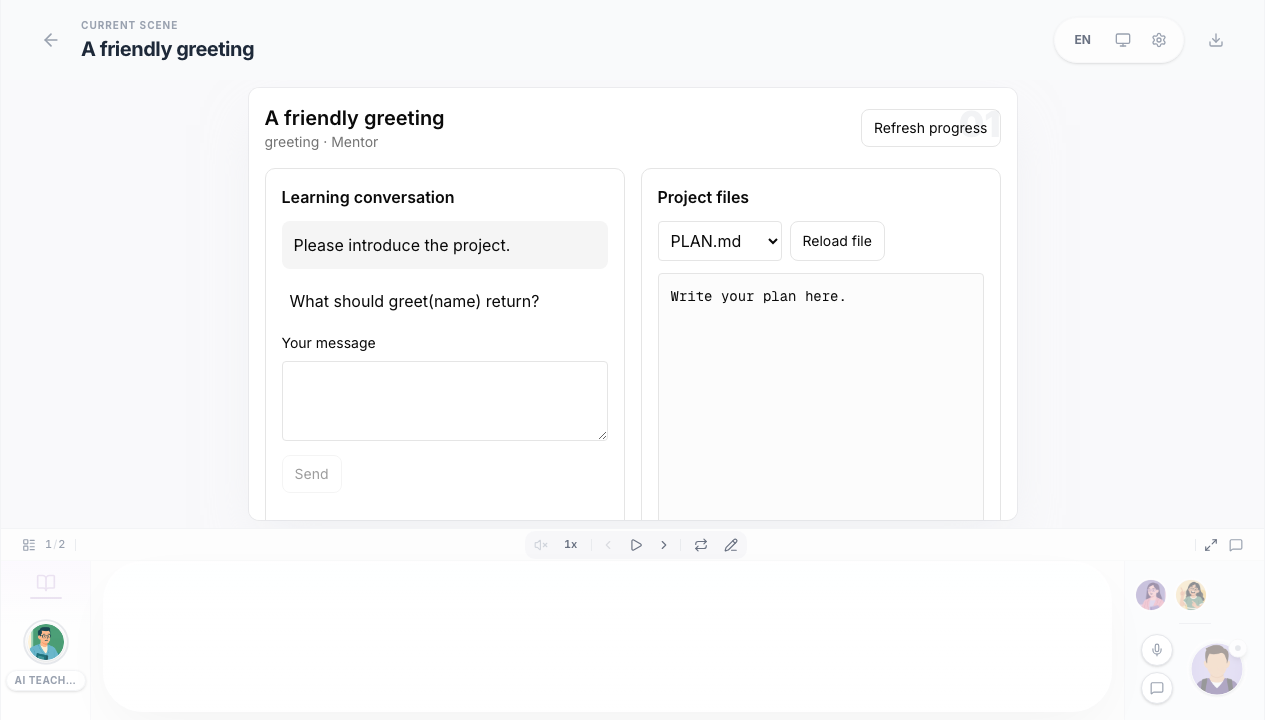
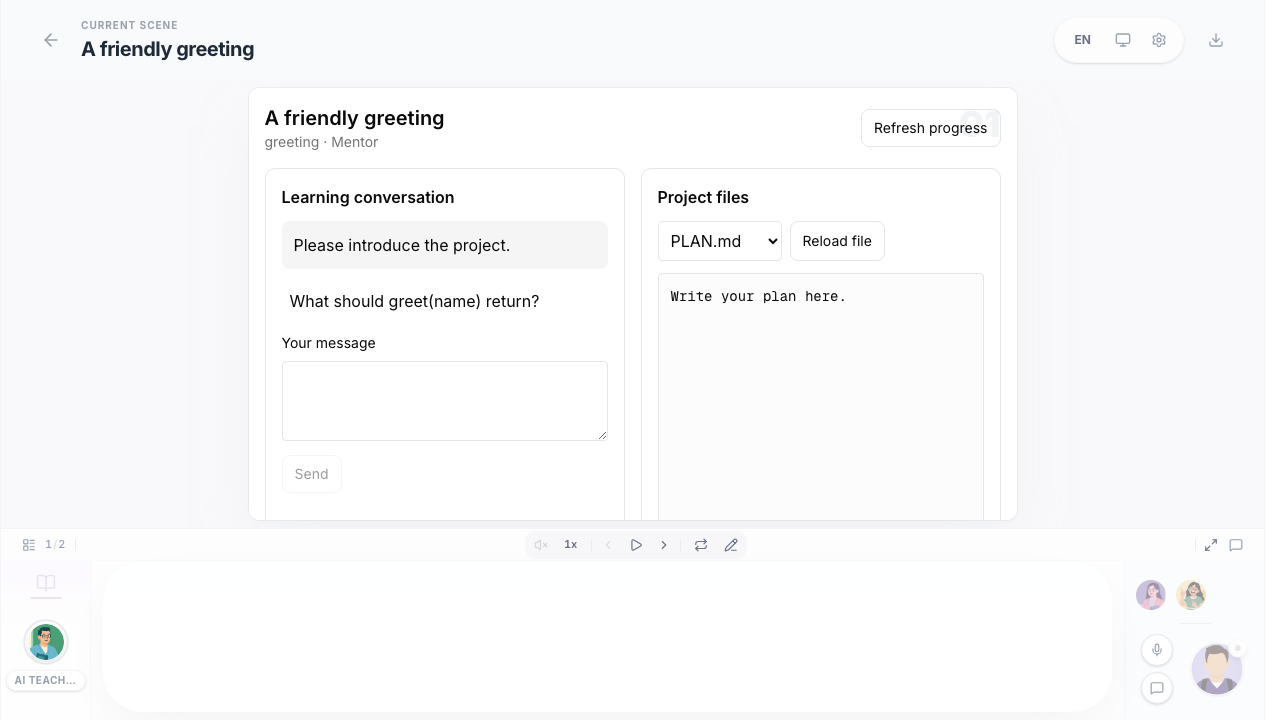
What does OpenMAIC change in practice?
Evaluate a short lesson on a topic whose answers you can check. Review the outline before generating media, inspect one slide and one question, and compare the material against a trusted source. Then test a manual correction and recovery after a refresh. Multiple agents can enrich presentation, but agreement between them is not independent evidence that a factual explanation is correct.
Inside the source: generation controls share one permission check
The imperative mayGenerateForStage function and the reactive useMayGenerateForStage hook both delegate to mayStartOwnerGeneration. The surrounding source defaults unresolved ownership to refusal. This aligns the UI affordance with the check a caller uses to start work. It is a client-side coordination mechanism, however, and should not be confused with proof that the server authenticates and authorizes every request.
Source: lib/classroom/generation-permission.ts at 65d5ac4. License: MIT. Original source text retained; line numbers and syntax colors added for this article.
Source attribution and license notices
MIT License

Copyright (c) 2026 THU-MAIC

Permission is hereby granted, free of charge, to any person obtaining a copy
of this software and associated documentation files (the "Software"), to deal
in the Software without restriction, including without limitation the rights
to use, copy, modify, merge, publish, distribute, sublicense, and/or sell
copies of the Software, and to permit persons to whom the Software is
furnished to do so, subject to the following conditions:

The above copyright notice and this permission notice shall be included in all
copies or substantial portions of the Software.

THE SOFTWARE IS PROVIDED "AS IS", WITHOUT WARRANTY OF ANY KIND, EXPRESS OR
IMPLIED, INCLUDING BUT NOT LIMITED TO THE WARRANTIES OF MERCHANTABILITY,
FITNESS FOR A PARTICULAR PURPOSE AND NONINFRINGEMENT. IN NO EVENT SHALL THE
AUTHORS OR COPYRIGHT HOLDERS BE LIABLE FOR ANY CLAIM, DAMAGES OR OTHER
LIABILITY, WHETHER IN AN ACTION OF CONTRACT, TORT OR OTHERWISE, ARISING FROM,
OUT OF OR IN CONNECTION WITH THE SOFTWARE OR THE USE OR OTHER DEALINGS IN THE
SOFTWARE.
Getting started
Follow the repository’s Quick Start and current configuration documentation for the local application, model providers and optional media services. Check which release you intend to run before choosing flags. The reviewed workbench release candidate uses NEXT_PUBLIC_WORKBENCH_ENABLED and is documented as disabled by default. Start without unnecessary media providers, then add capabilities after a small course works as expected.
Limits and what to verify
Course generation can consume model, image and speech-provider budgets and transmit uploaded materials to configured services. Review those data flows and the generated teaching content before sharing it with learners. MIT source availability does not include unlimited third-party inference. This article examines public source, release notes and project images; it does not claim a classroom trial, educational outcome study or successful local deployment.
Where it fits
OpenMAIC fits an article series about turning source material into an interactive lesson, with human review at each stage. The concrete evaluation is whether a short course is accurate, editable and recoverable, rather than whether a one-click demo looks impressive.
Official references: Repository · README at reviewed revision · Release history · Exact source excerpt.
Reviewed November 15, 2026. Discovery credit: 민둥이 | 쉽게 배우는 AI, video published November 14 covering a November 12 repository selection. This article independently examines the official source; that historical ranking is not presented as today’s ranking.