AI News
Anthropic Explains “Dreaming”: How Agents Reorganize Memory Between Tasks
An agent can remember a mistake as easily as a useful fact. Anthropic’s “dreaming” work addresses how saved experience is checked and organized before later use.
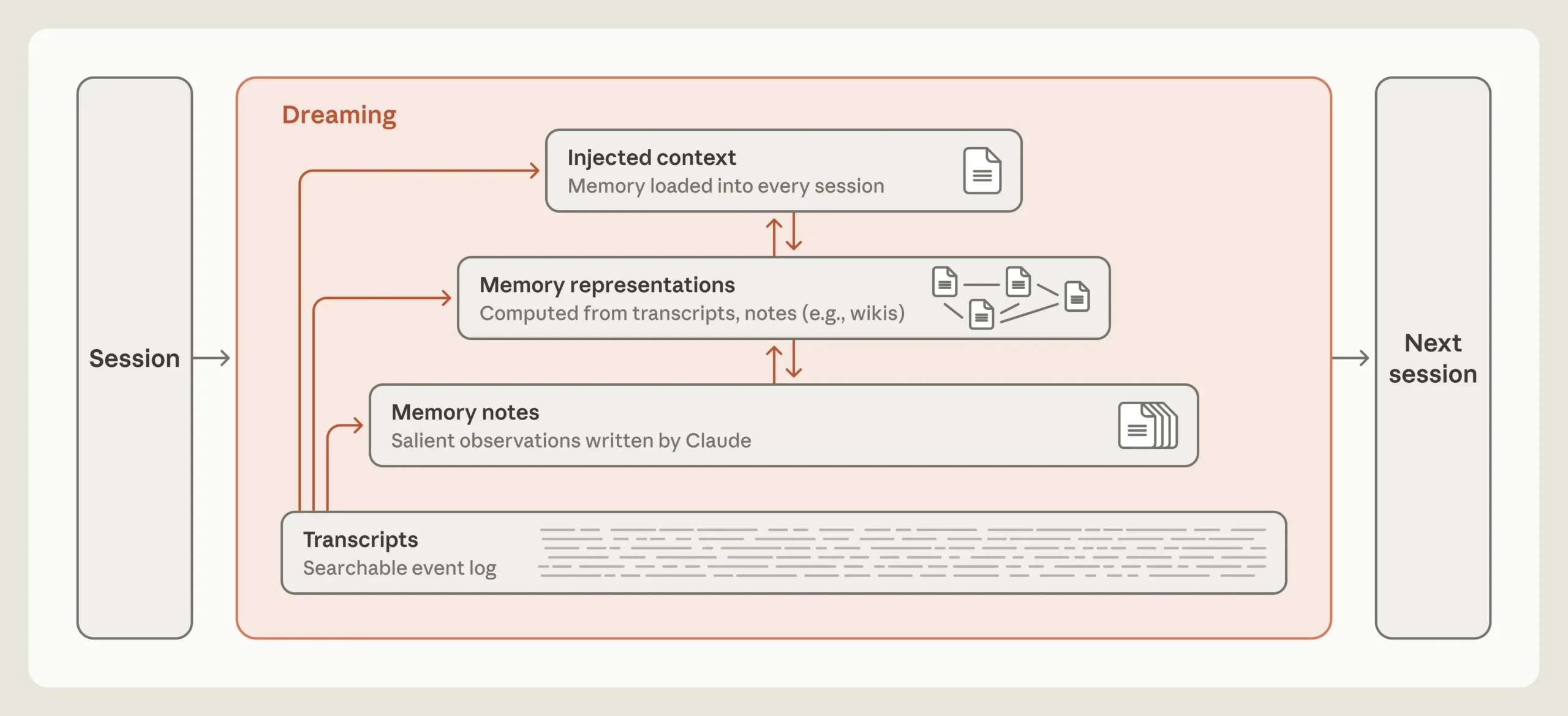
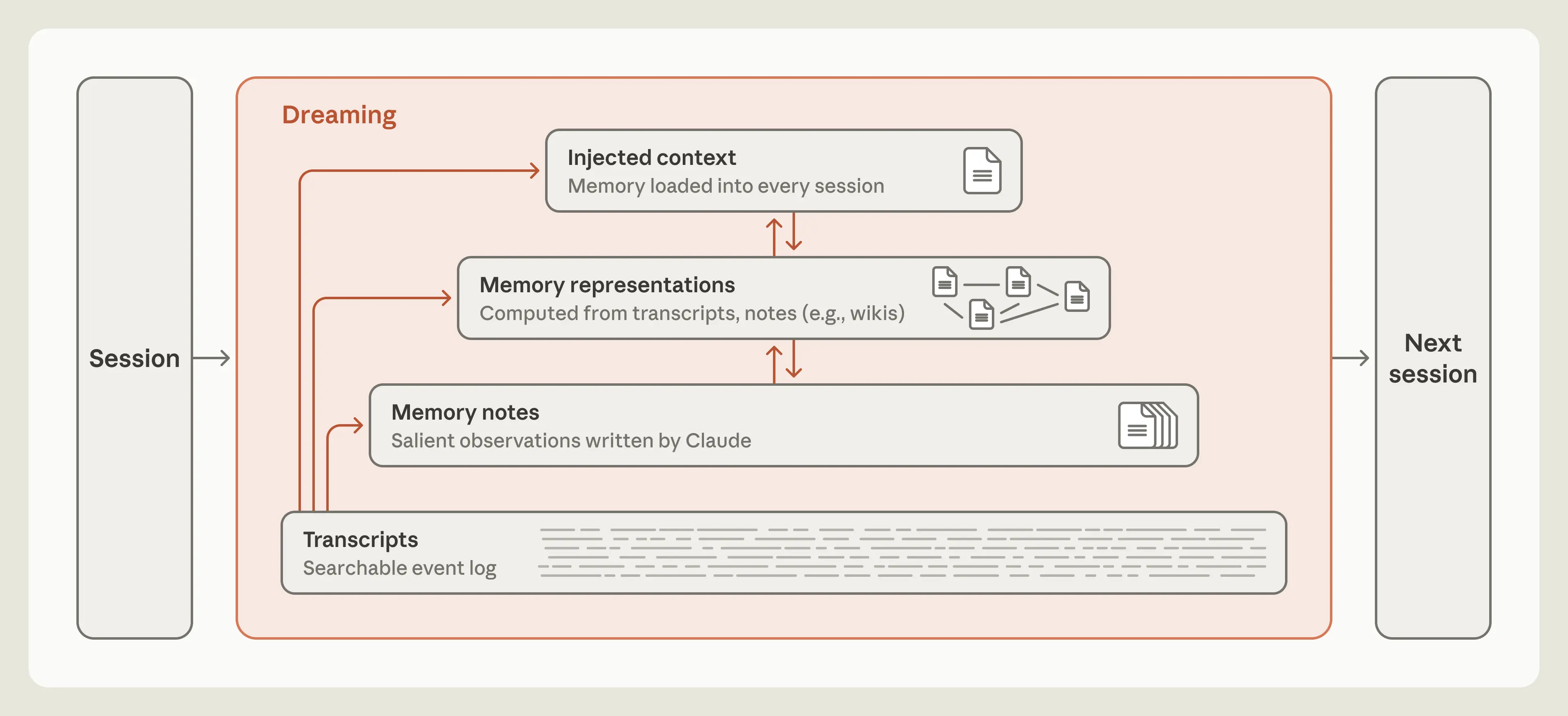
What dreaming does
Anthropic’s November 6 engineering article describes background reflection on transcripts and stored notes. An agent can correct mistakes, merge information, build linked representations such as wikis and select a small amount of context for future sessions. The article defines this persistent memory separately from model-weight changes and from summarizing an ongoing conversation.
Why more memory is not always better
Anthropic reports evaluations of memory notes and knowledge wikis, including benefits from combining a wiki with search. It also highlights maintenance costs, stale information and the risk of putting a wrong note into every future session. The article is research and engineering guidance; it does not establish a universal new switch available in every Claude interface.
A practical way to evaluate it
Our suggested trial is deliberately small: give an agent a dated instruction, replace it with a newer authoritative instruction, and ask whether its next session uses the correction. Inspect the saved note and its source, not only the final answer. A useful memory should explain why a fact is trusted and make an outdated version easy to retire. The small manual exercise below illustrates the idea; it does not reproduce Anthropic’s memory evaluations.
Our Claude exercise: replace stale facts and keep uncertainty
We tested the memory-maintenance idea with a small, fictional AcornParcel fixture in Claude Sonnet 5.5, Medium. The old notes gave a 16:00 shipping cutoff, a 30-day return window and an unsupported claim about Europe. Dated source entries replaced the cutoff with 18:00 KST from November 10 and specified 14 calendar days for unopened parcels; no source addressed Europe.
Old notes: cutoff 16:00; returns 30 days; Europe supported (guess).
S2, Nov 10: replace the weekday cutoff with 18:00 KST.
S3, Nov 10: returns 14 calendar days for unopened parcels.
No evidence about Europe.
Task: correct the notes, cite source IDs, retire old facts and mark unsupported claims unknown.
Claude retained the effective date and source IDs, retired the two outdated values and marked Europe Unknown. Asked whether a weekday order at 17:30 on November 11 missed the cutoff, it correctly answered that 30 minutes remained and cited S2. It also declined to confirm Europe support.
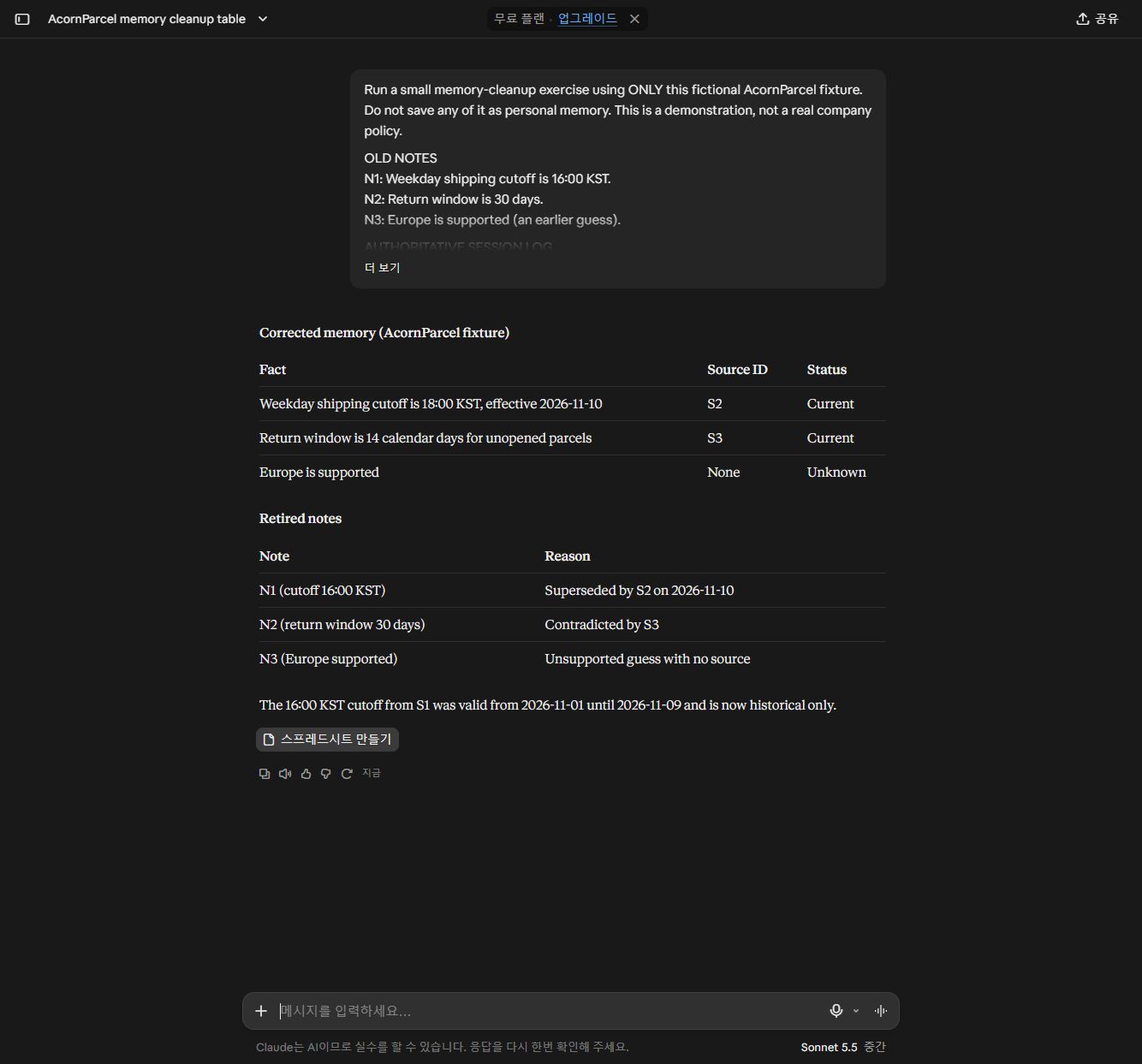
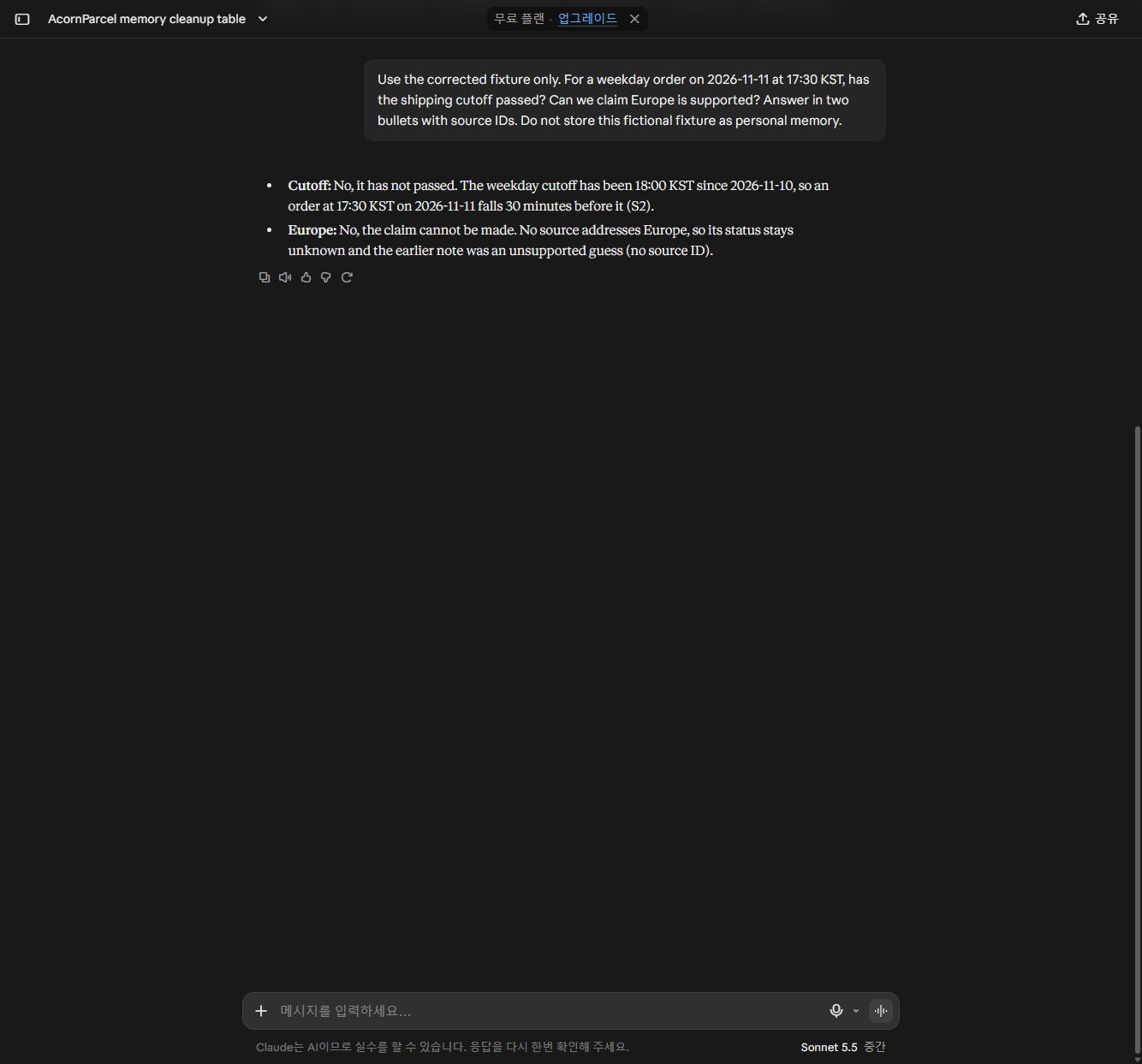
What this does and does not show: this manually prompted, same-chat exercise illustrates source-backed note correction. It does not test automatic dreaming between sessions, persistent-memory retrieval, the Managed Agents API or Anthropic’s research benchmark. We explicitly told Claude not to save the fictional fixture as personal memory.
From a pile of notes to something an agent can trust
It helps to separate four jobs: capture what happened, retain the evidence, resolve contradictions, and retrieve only what the next task needs. Saving a transcript handles the first two. It does not decide which instruction is current. A short summary can still preserve an obsolete fact, and a detailed archive can still be useless if the relevant correction is never retrieved.
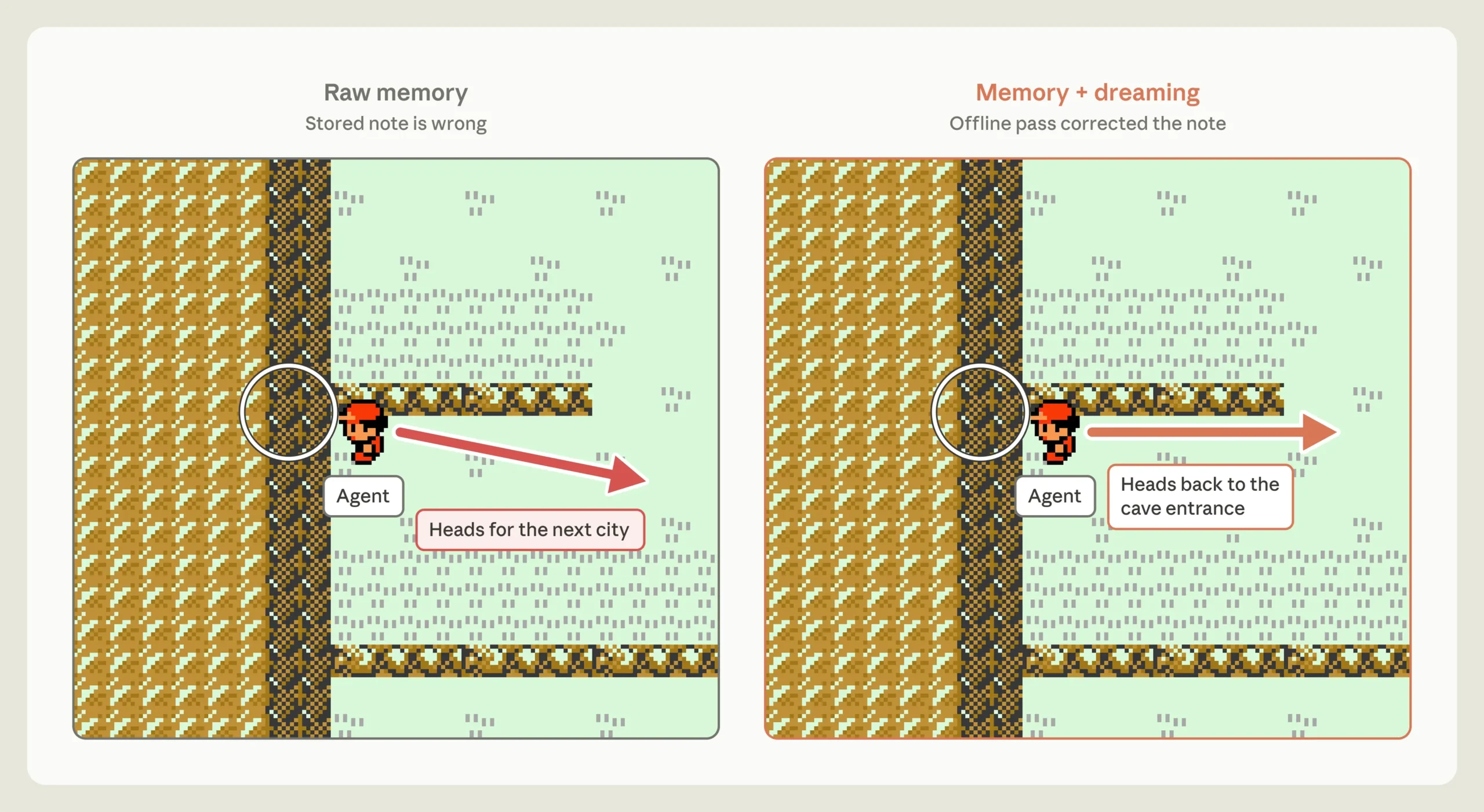
The map example is useful because a bad memory can become an input to future decisions. A navigation error is no longer isolated if every later plan begins from the same wrong map. In a customer-support assistant, the comparable failure would be repeatedly applying an expired return policy. Correcting the stored representation can matter more than writing another confident answer.
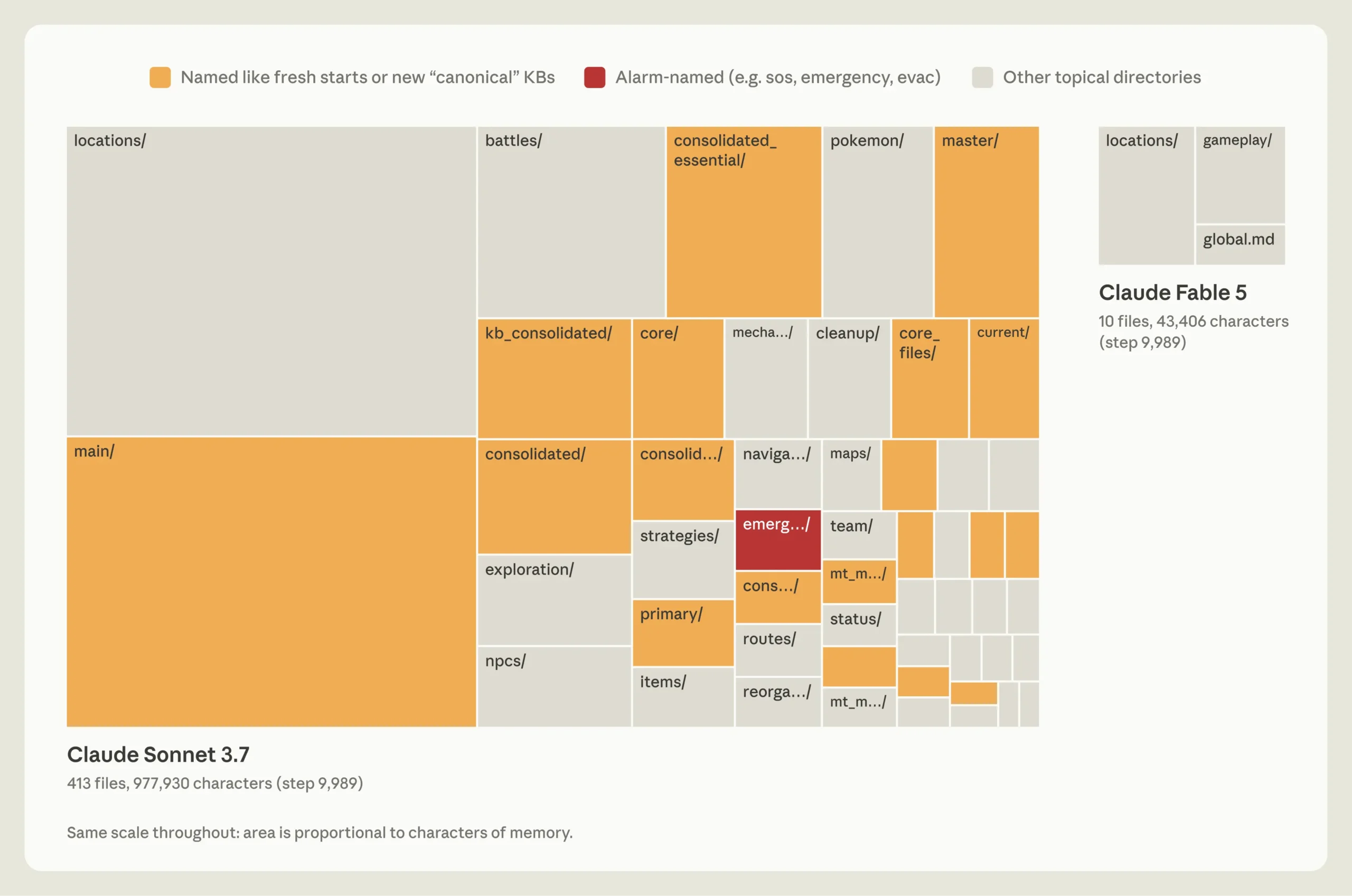
What our fictional fixture teaches
| Memory entry | Status after checking | Why it matters |
|---|---|---|
| 18:00 KST cutoff, effective November 10 | Current; linked to S2 | The date prevents a new rule from being applied to an older event without thought. |
| 16:00 cutoff | Retired | Keeping the history is useful; presenting both as active instructions is ambiguous. |
| Europe support | Unknown | A guess should not become a fact just because it appears in saved notes. |
The follow-up question tested whether the corrected value was usable, not merely whether Claude could produce a tidy table. It still remained in the same conversation. A stronger persistence test would start a separate session, inspect the retrieved note and check whether the correction survives without re-supplying the answer. We did not perform that stronger test, so the screenshots support the narrower result described above.
For a practical memory workflow, keep an evidence reference and an effective date next to important instructions. When two sources conflict, ask the system to identify the conflict instead of silently choosing one. That gives a reviewer something concrete to inspect and makes a confident answer easier to challenge.
Read the source: Anthropic · figures by Monika Tuchowska · A different approach: editing model weights.
Reviewed November 15, 2026. Discovery credit: JoCoding’s November 8 IT NEWS briefing. This brief independently checks the linked primary source and distinguishes the announcement date from this article’s publication date.