AI News
Meta Muse Voice Begins a US Rollout With Real-Time Avatars
Muse’s voice update changes how users talk through a task. The launch details matter as much as the animated avatar: Meta announced an initial US rollout.
Scope: US product rollout
Read the official source ↗
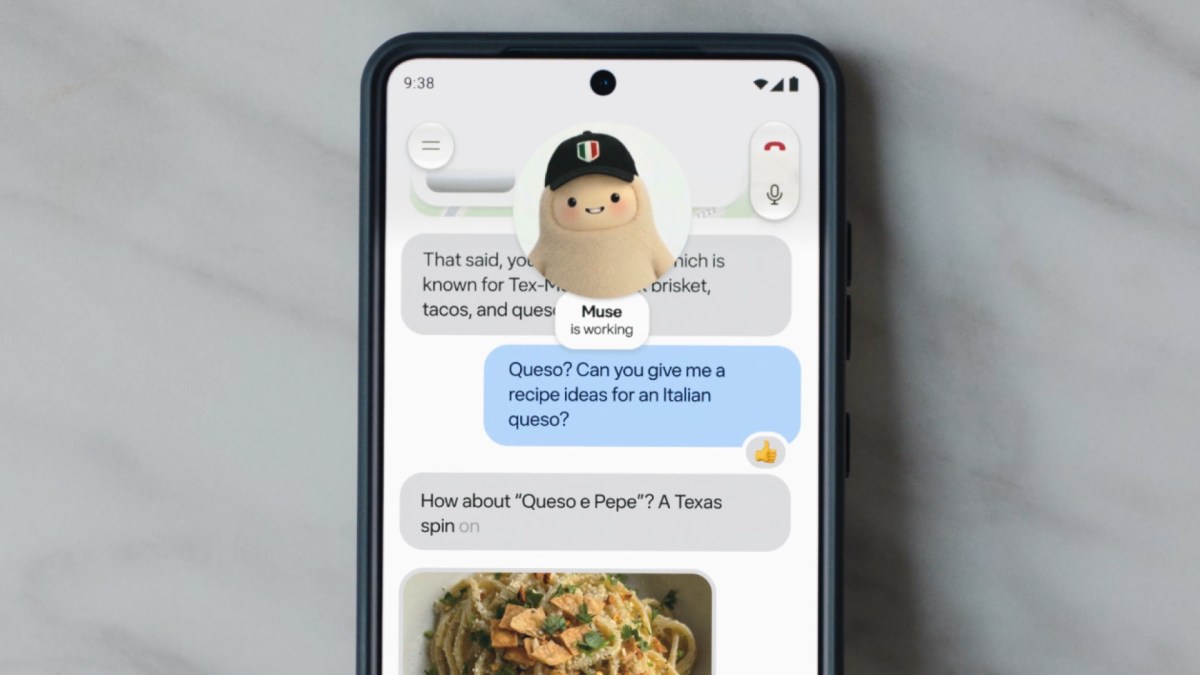
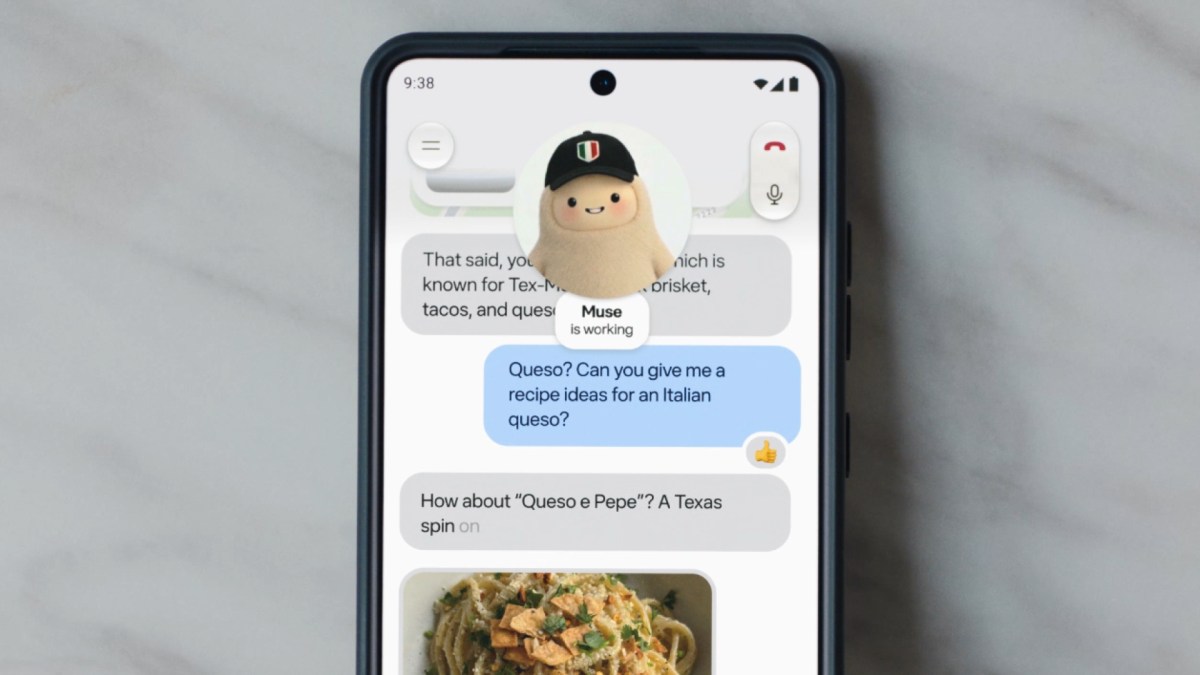
What Meta announced
Meta’s November 5 announcement, updated November 6, introduces voice and expressive avatars in the Muse app on mobile, web and Mac. Users can start from the phone icon, interrupt a response and choose a voice. The interface can show only audio, an avatar beside the conversation or a full-screen avatar.
Availability and the next devices
The announcement says the rollout starts in the US. Voice conversations on AI Glasses and Muse Charm are described as coming soon. Those future device plans should not be read as completed availability, nor does this launch establish access in every country. The announcement describes conversations with Muse; separate business-calling features should be checked against their own launch terms.
What to try first
Our suggested use is a short rehearsal: describe a presentation, answer a follow-up question, then ask for a written list of the changes agreed on. Compare that list with what you actually said. Natural timing and facial expressions can make an assistant feel attentive, but the written result is easier to review. We have not tested the rollout on a US account.
What the voice interface actually changes
A spoken assistant changes the rhythm of a task. You can explain an unfinished idea, hear a response and correct it before it reaches the end. An avatar adds another layer of feedback: facial movement and timing can make the exchange easier to follow. Neither layer automatically makes the answer more accurate, so the useful evaluation has to examine both the conversation and its result.
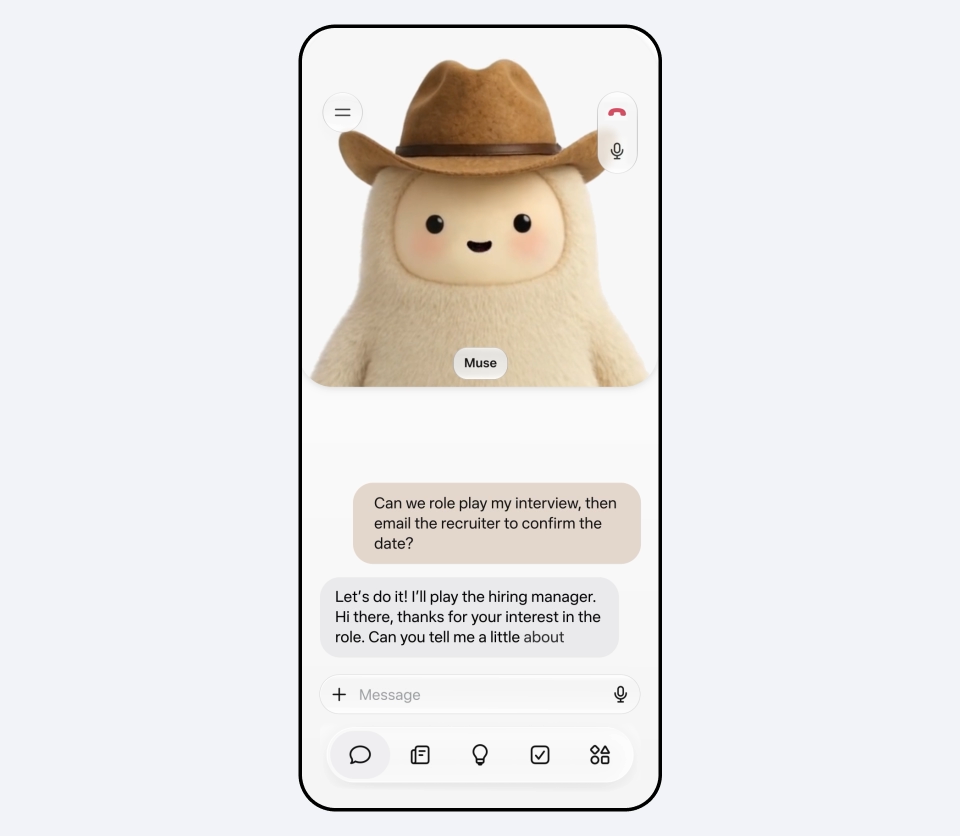
For example, a rehearsal assistant might sound encouraging while overlooking an incorrect date in a presentation. A planning assistant might appear to acknowledge a change but omit it from the final checklist. In both cases the interface feels responsive while the task remains unfinished. The written artifact is an effective place to look for those gaps.
How the voice and avatar stay connected
Meta’s September technical explanation describes a shared stream of speech tokens feeding the audio and avatar paths. The avatar also uses reference media and recent generated visual context. The architectural point is synchronization: the video is conditioned on the speech being produced rather than treated as an unrelated animation playing beside an answer.
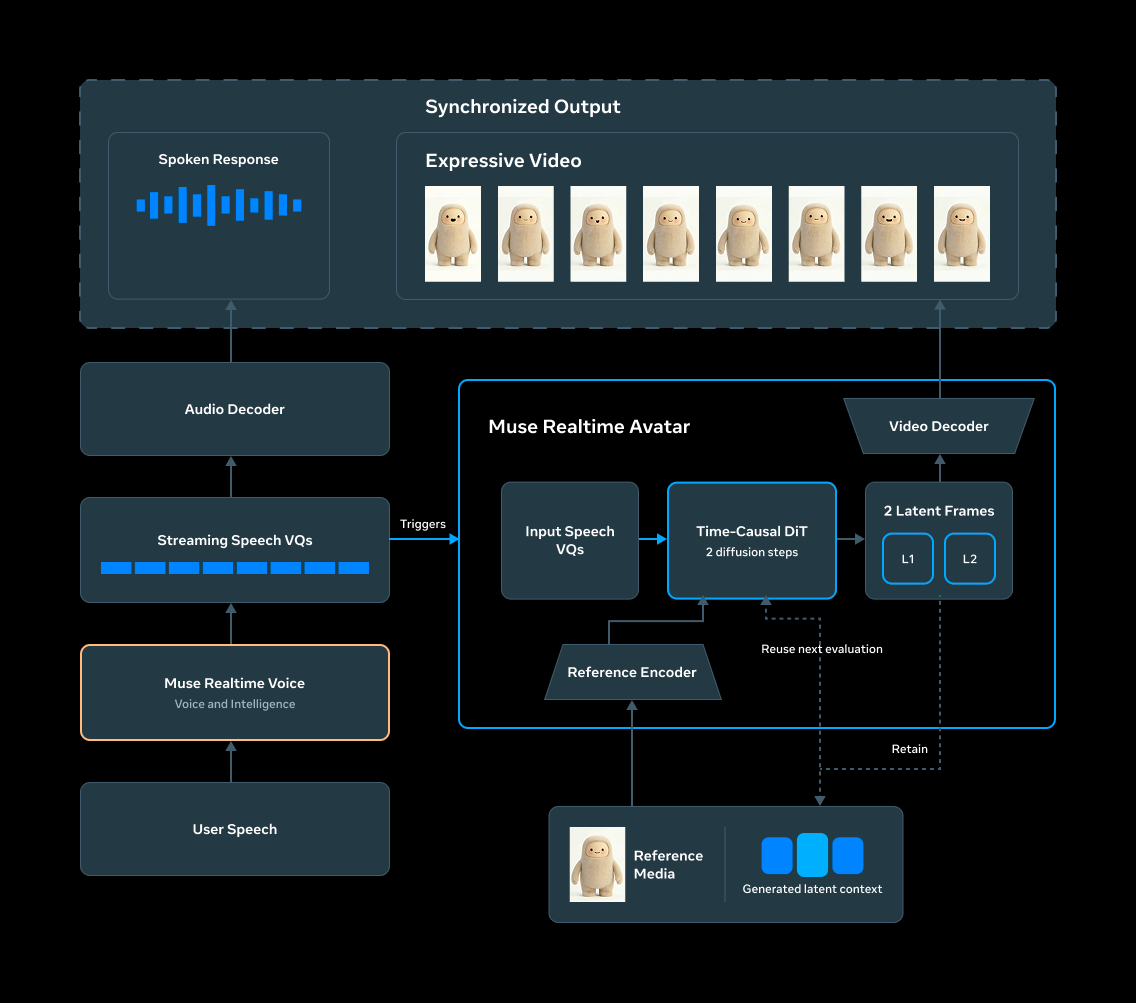
Read the diagram from the user’s speech at the lower left. One path produces the spoken response; another turns the speech representation and visual reference into expressive video. The retained visual context helps relate successive video chunks. This explains the design, but it does not measure performance on a reader’s device or prove that lip synchronization and continuity are always correct.
A practical first session to evaluate
The following is a proposed test, not a session we ran. Use a fictional three-minute presentation outline with two constraints: a fixed deadline and a budget ceiling. Ask Muse to rehearse an opening, interrupt once to change the deadline, and then request a written summary. Check whether the old deadline disappears and the budget survives the conversation.
| Moment to inspect | Question to ask |
|---|---|
| Interruption | Did the next answer reflect the correction, or continue the previous plan? |
| Spoken and visual response | Did sound and expression remain coherent enough to follow? |
| Final written summary | Were the agreed changes captured accurately, without invented decisions? |
This gives you a reason to use voice beyond novelty: quickly shaping an idea while preserving a result you can review. For tasks involving exact numbers, copy the final values into a checklist and compare them with your original constraints.
Availability and the boundary of this review
We have not activated the US rollout or tested an avatar on our account. The images here come from Meta, and the proposed exercise should not be read as a performance review. Check availability in your own account before planning a workflow around it. Muse’s conversational voice is also a different use case from Google Meet’s translated listening audio: one is interaction with an assistant, while the other helps participants understand a meeting.
Read the source: Meta.
Reviewed November 15, 2026. Discovery credit: JoCoding’s November 8 IT NEWS briefing. This brief independently checks the linked primary source and distinguishes the announcement date from this article’s publication date.