AI News
Four AI and Data Proposals From Seoul’s City Hall Showcase
Seoul’s November 9, 2026 Creative Administration showcase presented four proposals using AI or data in city services. The ideas cover Han River rescue alerts, detection of underground water leaks, outreach to households facing hardship, and referrals to welfare resources. The city selected eight presentations from 699 submissions across two tracks. The showcase established what staff proposed. Each project’s deployment and effectiveness require separate evidence.
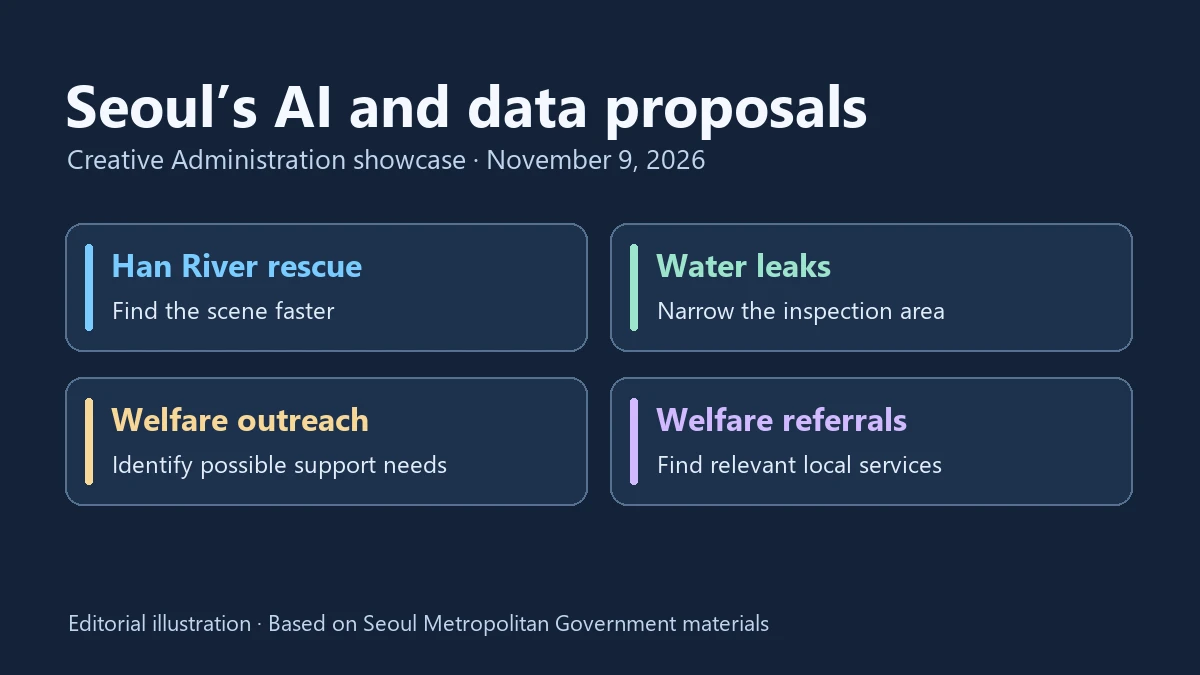
What each team proposed
| Proposal | What the system would support |
|---|---|
| Han River rescue Future Hangang Project Headquarters | The winning Pungdeong proposal uses AI-assisted detection and drones to help responders locate a person in the water faster. The city’s event coverage describes a demonstration with a mannequin. |
| Acoustic leak detection Seoul Arisu Headquarters | Analyze recorded pipe sounds to help utility staff narrow down where to inspect for a possible underground water leak. |
| Welfare outreach Gangnam District | Use administrative data to help staff identify cases that may warrant an outreach check. |
| Welfare Link Seoul Yangcheon District | Help staff find suitable public or community support by bringing information about available resources together. |
What a pilot would need to measure
The rescue proposal can be evaluated by timing the handoff from a simulated alert to a location confirmed by responders. Track missed incidents, false alerts and weather conditions, then compare the process with the current reporting route. A staged demonstration shows the proposed sequence. It takes repeated tests under representative conditions to estimate reliability.
For leak detection, the result that matters is a leak confirmed in the field. A pilot could compare AI-assisted inspection with the utility’s usual workflow on similar pipe segments, tracking confirmed leaks and staff time spent following leads. A higher number of alerts only helps if inspections confirm more actionable problems.
The welfare ideas need a different standard. A referral or outreach suggestion should be reviewable by qualified staff, with understandable reasons and a way to correct inaccurate information. Before using resident records, the city would need to explain which data the system uses, who can see it and how residents can seek review. Approval, denial and eligibility decisions should remain with authorized officials. An early usability exercise could use a fictional referral and a public service directory to see whether staff can find and verify a service entry.
What Seoul has confirmed so far
The city’s showcase materials identify the proposals and describe what they aim to improve. They do not provide a common set of deployment dates, audited error rates or citywide performance results. Look for separate notices from the responsible department to confirm where a pilot runs and what it measures. This article reviews the city’s public materials. We did not test the systems or access resident data.
Sources: Seoul Metropolitan Government’s press release · Seoul’s event coverage · Official event video · JoCoding’s summary.