AI Technical Articles
When Does Claude Ask for Approval During an MCP Task?
Suppose you ask Claude to prepare a report and show it to you before saving a copy. The report can be ready while the file still does not exist. What makes Claude stop and ask? The MCP server must request a decision at that point, and its export tool must wait for the answer before it writes the file. In Claude Code, that mid-task question is called elicitation.
There are two decisions you might see in the same session. A tool-permission prompt asks whether Claude may call a tool. An elicitation form comes from the server during the work. You can allow a reporting tool to start, inspect its proposed destination, then decline the export.
What a background task can do while you decide
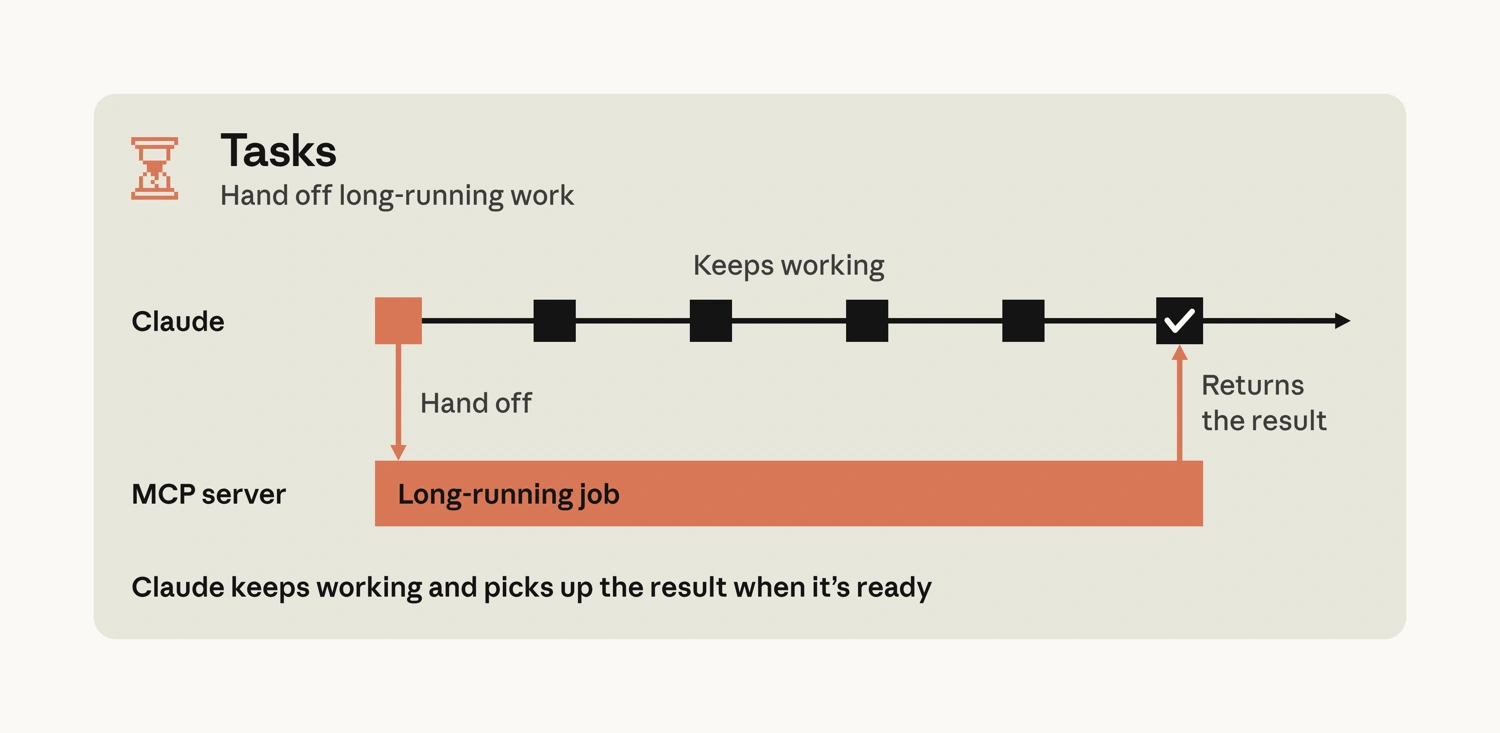
Tasks let a server take on a long-running operation while Claude continues working. Elicitation lets the server ask for information through the client. A connector can use either capability on its own. In its November 24 announcement, Anthropic gave a concrete example: Supabase asks users to confirm the cost before it creates a paid project. A different connector can ask for a project name, offer a destination, or finish a read-only lookup without a question.
If you use one of the tools from our Chrome DevTools MCP walkthrough, the same distinction matters. Permission to call a browser tool describes what Claude may invoke. Any additional question during that call depends on what the server implements.
One export, four answers, one file
We connected a Python MCP client to a local server using the official SDK, version 1.30.0. Each run started with an empty temporary directory and the same two-line report. The server sent the form question “Save report.csv with the sample total?” with a Boolean field named save. Our test client supplied one response per run and checked that the directory was still empty when the question arrived.
| Client response | Save field | Tool result | File on disk |
|---|---|---|---|
| Accept | True | saved | report.csv, 22 bytes |
| Decline | — | skipped | Absent |
| Cancel | — | skipped | Absent |
| Accept | False | skipped | Absent |
The last row is easy to miss when building a connector. Accepting a form submits its values. A user can submit a form with the Save box unchecked. An exporter that checks only action == "accept" would write a file against that choice. Here is the relevant branch from our tool:
answer = await ctx.elicit("Save report.csv with the sample total?", SaveChoice)
if answer.action == "accept" and answer.data.save:
    target.write_bytes(b"metric,value\norders,3\n")
    return "saved"
return "skipped"
We reopened the saved file and verified the header metric,value and the row orders,3. In the other three runs we checked the directory for the file. This was a protocol-level test with scripted answers and an in-memory connection. The Claude interface and remote background scheduling are documented separately below.
Where to find a pending question in Claude Code
In the terminal, a server can request a form or ask you to open an external URL for a flow such as sign-in. If a background task appears to be waiting while you have /tasks open, close the task list to see its dialog. On versions supporting deferred answers, you can return later by opening /tasks, selecting the task’s details and pressing Enter. Anthropic documents the answer-later behavior for Claude Code v2.1.324 and newer.
Declining the form tells the server your choice. The service decides whether to skip a step, continue other work, or end the job. Stopping the task is a separate action. Claude Code can request cancellation, and a remote service may already have completed some work. If the question concerned an export, check the destination before starting a second one. Claude Code’s background task guide.
Which features did Anthropic release?
On November 24, Anthropic announced Tasks and Elicitation as generally available in Claude and Claude Code for Pro, Max and Ultra, with Team and Enterprise rollout under way. Skills over MCP entered public beta, and File Uploads was listed as coming soon. Client support, the server’s capabilities and the service’s own workflow determine which interactions you see. For an export that needs sign-off, the useful check is simple: identify the exact write, locate the decision immediately before it, and verify the destination after each possible answer.
Anthropic’s November 24 release · Claude Code elicitation guide · MCP form and response specification · Official Python SDK · Mindung EasyAI’s overview (Korean)